My research team’s work focuses on understanding the last stages of stellar evolution. We aim to determine the progenitors and explosion mechanisms of supernovae. To decipher this my team works on both theory and observations from the UV to MIR wavelengths. Details of some of the projects my group is involved in are given below.
MidInfared SuperNovA Collaboration (MIRSNAC)
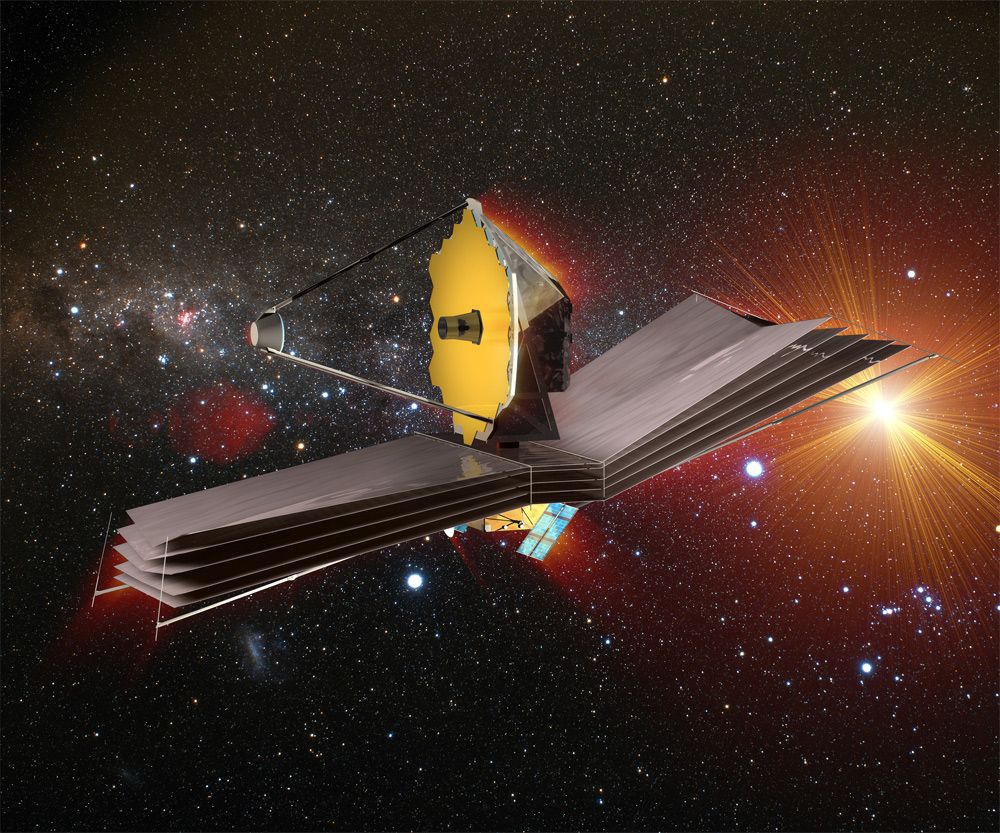
The MIRSNAC uses the JWST to understand the physics of supernovae explosions. We have 6 successful programs spread consisting of more than 100 hours of time spread over three Cycles. These projects will obtain MIR spectroscopy of supernovae explosions. This project has over 30 members across the globe, click here to see more details on the MIRSNAC.
Precision Observations of Infant Supernova Explosions (POISE)
POISE will collect a high-precision data set of over 300 infant supernovae and transients in order to understand the outermost layers and progenitors of these explosions. To expand our understanding of SN origins, we need rapid-cadence observations obtained in the first few hours-to-days after explosion. From these very early observations, we can estimate key explosion parameters, distinguish between leading explosion models, and study the local environment of their progenitors. This project is the next stage of the Carnegie Supernova Project and uses a global network of telescopes.

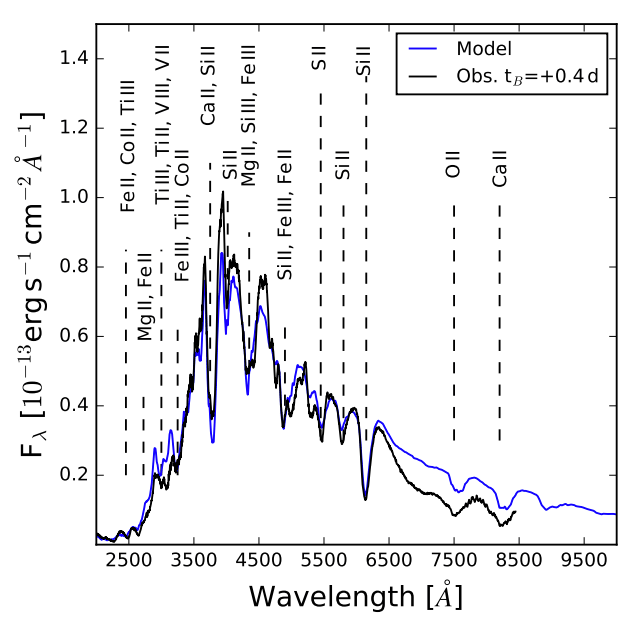
Radiation Transport Models
Other collaborations
My research team is also involved in many other projects including, but not limited to, the extended Public ESO Spectroscopic Survey of Transient Objects (ePESSTO+), the Electromagnetic counterparts of gravitational wave sources at the Very Large Telescope, the Spectroscopic Classification of Astronomical Transients.
 Prof. Chris Ashall